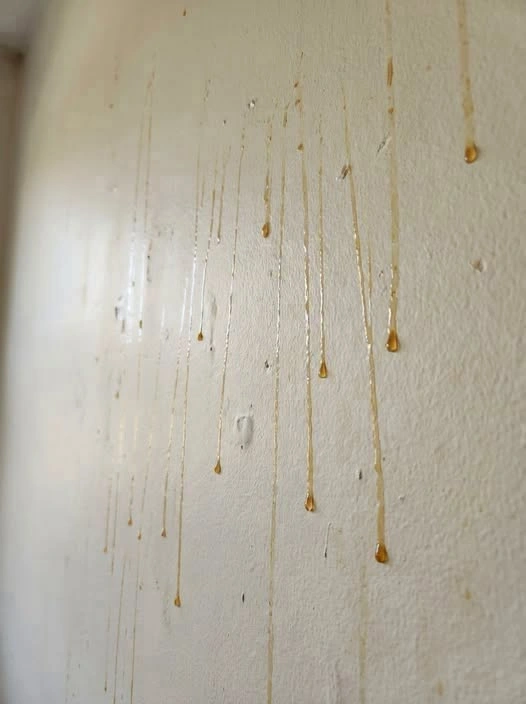
Discovering unexpected yellow streaks or sticky droplets running down your bathroom walls can be an unsettling experience for any homeowner, often leaving you to wonder if you are dealing with a simple cleaning oversight or a more complex structural issue.
These marks are frequently the result of moisture interacting with various substances already present on the surface, creating a chemical reaction that manifests as discolored trails that seem to appear out of nowhere despite your best efforts to maintain cleanliness...
These streaks often stem from common household factors such as accumulated soap scum, mineral deposits from hard water, or even lingering residue from past occupants, such as nicotine. In many cases, the bathroom environment itself acts as a catalyst.
Because bathrooms are naturally high-humidity zones, steam and condensation collect on walls and ceilings, effectively liquefying these surface deposits and causing them to drip down.
If your ventilation system is inadequate, this moisture remains trapped, providing the perfect breeding ground for mildew or bacteria, which can also contribute to the appearance of these persistent yellow or brownish stains.
When these microscopic organisms thrive on the wall surface, they can produce pigments that run down the wall as they are rehydrated by shower steam.
Furthermore, certain types of paint may react to persistent, high-humidity conditions, causing binders to leach out of the finish and create a yellowish, oily-looking drip that mimics the appearance of liquid stains.Bathroom Beyond basic buildup, the texture and location of the streaks can provide significant clues regarding their origin.
If you notice that the stains feel greasy or are primarily concentrated in higher areas of the room, you might be dealing with old smoke residue or the byproduct of burning candles, which settles on surfaces over time and becomes visible once moisture activates it.
These oily residues are notoriously difficult to remove with water alone, often requiring a degreasing agent to fully lift them from the paint.
Conversely, if the yellow-orange marks are located near ceiling joints or plumbing fixtures and consistently return shortly after you have scrubbed them away, this could be a warning sign of a more serious issue, such as a hidden water leak or rusting pipes behind the wall structure.
In these specific cases, the moisture is not just condensation from the air, but rather an active intrusion from behind the surface materials. Addressing this issue requires a proactive approach to moisture management and regular maintenance.
The most effective way to prevent these streaks from forming is to ensure your bathroom remains as dry as possible. Always engage your exhaust fan during every shower and keep it running for at least fifteen to twenty minutes afterward to clear out the excess steam.
If you do not have a fan, opening a window or using a dehumidifier can significantly reduce the amount of condensation that settles on your walls. Additionally, making a habit of wiping down surfaces with a dry cloth after use can prevent the moisture-substance interaction that creates these unsightly trails.