In Antarctica, darkness does not simply mean that the sun has gone down. During the depths of winter, darkness can stretch for weeks or even months.
Temperatures can fall to dangerous levels, winds can turn ordinary travel into a life-threatening ordeal, and vast distances separate isolated research stations from the outside world.
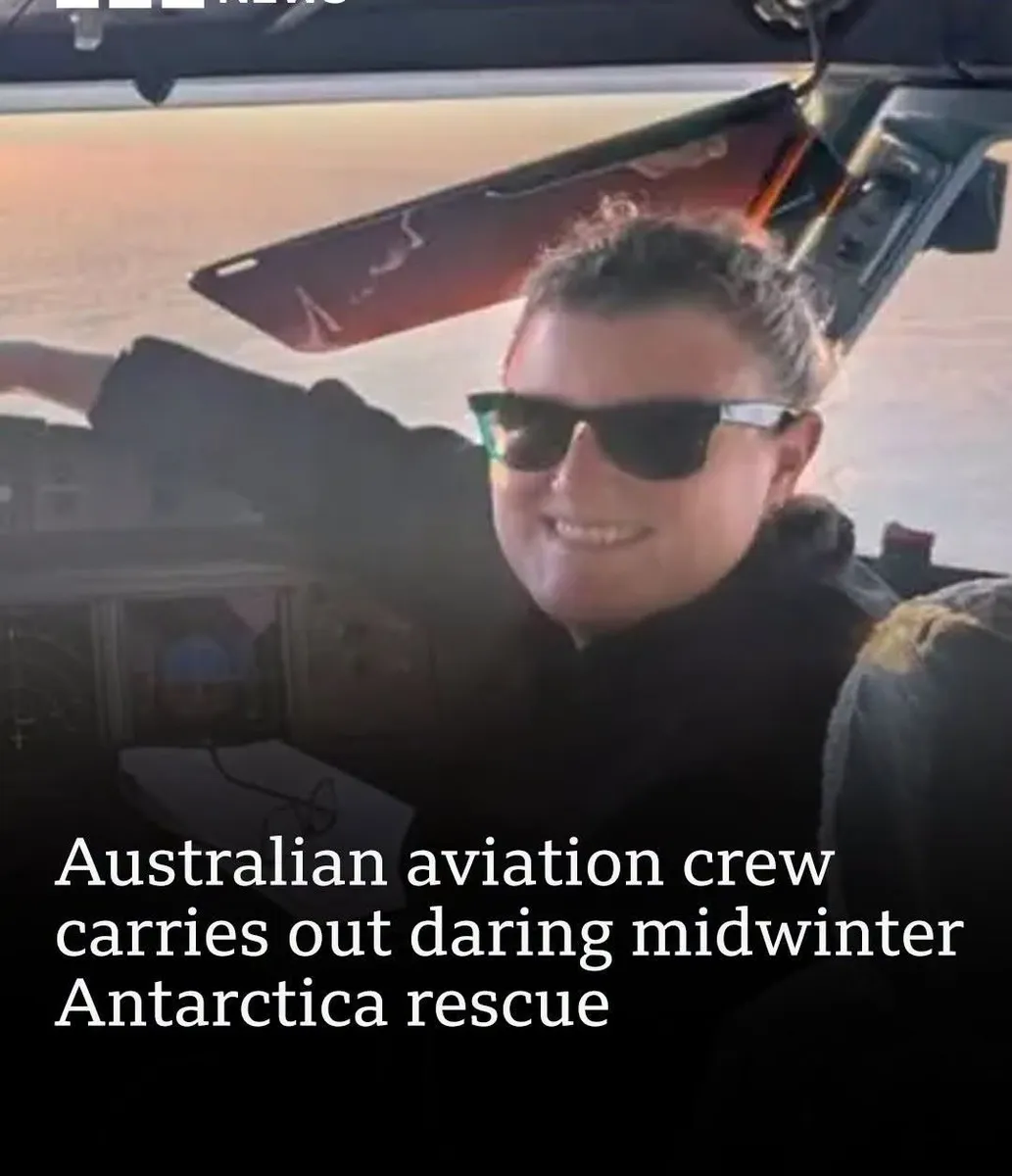
It was against that extraordinary backdrop that an Australian aviation crew undertook a remarkable midwinter mission to rescue a United States expedition member from an Antarctic station. The circumstances were unlike almost any conventional rescue operation. There was no daylight to guide the crew.
There were no nearby roads or airports in the usual sense. There were no cities waiting beyond the runway. Instead, the aircraft and its crew faced an environment dominated by ice, darkness, extreme cold, and uncertainty.
For the person waiting at the remote station, however, the mission was not an adventure. The rescue began with the recognition that the expedition member needed to be evacuated from Antarctica. In normal circumstances, moving someone from a remote location to medical care can already be complicated.
In Antarctica during winter, the difficulty increases dramatically. Many Antarctic stations operate under conditions that make routine flights impossible for extended periods. Aircraft require specialized preparation, crews need extensive training, and every stage of the journey must be carefully planned. weather can change quickly.
A flight that appears possible one moment can become impossible hours later. The darkness creates another major challenge. Pilots cannot rely on the visual cues available during normal operations, particularly over enormous stretches of featureless snow and ice. For an aviation crew, precision becomes essential. Every calculation matters.
Every communication matters. Every decision has consequences. Yet the Australian team prepared to go. The mission represented the kind of operation that demonstrates just how important international cooperation can be in Antarctica.
Although the continent is remote from almost every major population center, it is home to researchers and expedition members from countries around the world. Scientific work conducted there contributes to knowledge about climate, oceans, geology, biology, atmospheric conditions, and the changing polar environment.
But those working in Antarctica also face risks that are rarely encountered elsewhere. Isolation is one of the greatest. A person who becomes sick or injured at an Antarctic station cannot simply be taken to the nearest hospital by road.
Instead, emergency planners may have to consider aircraft, weather systems, runway conditions, fuel requirements, communications, crew safety, and the availability of medical support. The rescue flight therefore represented much more than a journey from one station to another.
It was a carefully coordinated operation in one of the most hostile environments on Earth.