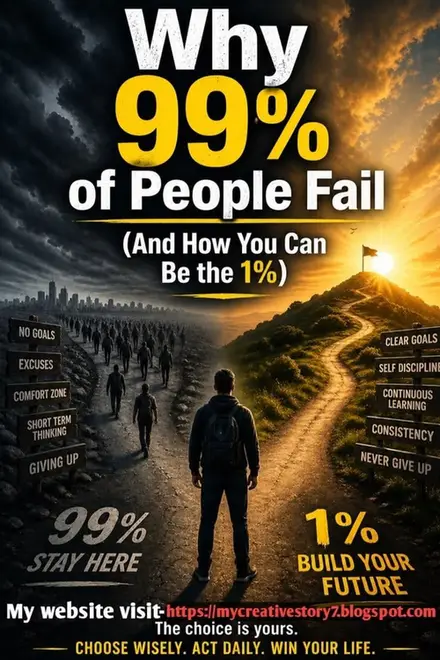
Choose Your Path: Escape the 99% and Build the Future You Want. There comes a moment in life when you realize that simply following the crowd will not necessarily take you where you want to go.
Everyone around you may be moving in the same direction, following the same routines, chasing the same definition of success, and repeating the same habits. It can feel safe because there is comfort in doing what everyone else is doing.
“Choose Your Path” is a reminder that your future should not be decided by the crowd. You have the ability to think differently, make deliberate choices, and build a life that reflects your own goals and values. Escaping the “99%” does not mean believing you are better than everyone else.
It means refusing to live on autopilot. It means questioning habits that do not serve you, taking responsibility for your decisions, and being willing to create your own definition of success. The majority often chooses what feels familiar. The uncommon choice is sometimes to learn, experiment, sacrifice, and build patiently.
That path can be difficult, but difficulty does not automatically mean you are making the wrong choice. Imagine two people waking up every morning. Both have dreams. Both have opportunities. Both have the same twenty-four hours. One spends every day reacting to whatever appears in front of them.
They scroll endlessly, complain about circumstances, postpone important decisions, and wait for motivation. The other person creates priorities. They learn something useful. They protect their time. They work toward a long-term goal even when nobody is watching. After one day, the difference may be invisible.
After one year, it may be significant. After ten years, it could completely transform their lives. This is the power of daily choices. Your future is rarely created by one giant decision. It is usually created by hundreds of small decisions repeated over time. What you do today matters.
What you repeatedly do matters even more. If you want a different future, you have to be willing to make different choices. That might mean waking up earlier to work on a project. It might mean spending less money than you earn.
It might mean learning skills instead of spending every free hour consuming entertainment. It might mean surrounding yourself with people who encourage growth. It might mean saying no to opportunities that look attractive but do not support your bigger goals.
It might mean accepting temporary discomfort in exchange for long-term freedom. These choices are not always exciting. Sometimes they are boring. Sometimes they require sacrifice. Sometimes nobody notices. But that does not make them unimportant. One of the biggest advantages you can develop is the ability to think long-term.