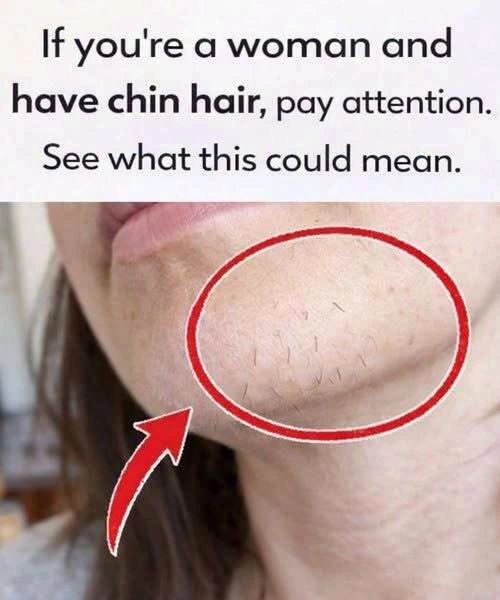
Understanding Chin Hair in Women: Causes, Biological Factors, and Effective Management Strategies Discovering a stray hair on your chin can be an unexpected and often confusing experience for many women, yet it is a remarkably common occurrence that frequently goes undiscussed in polite society.
While beauty standards often emphasize a smooth, hair-free face, the reality of human biology is far more complex and diverse. Understanding why these hairs appear requires looking past the surface to examine the intricate interplay of hormones, genetic predispositions, and the natural cycles of hair... growth that every individual experiences.
The hair growth cycle is a continuous, three-part process consisting of the anagen phase, where the hair is actively growing; the catagen phase, a transitional period; and the telogen phase, during which the follicle rests before shedding.
When hair appears on the chin, it is usually because the follicles have been stimulated to enter the anagen phase more frequently or with greater intensity than usual. This process is primarily driven by androgens, a group of hormones that includes testosterone.
While androgens are often associated with male physiology, they are naturally present in all women.
When these levels fluctuate or when follicles become hypersensitive to them, the result is often the growth of terminal hairs, which are thicker and more pigmented than the fine vellus hair typically found on the face. Hormonal shifts are perhaps the most significant drivers of changes in facial hair patterns.
Conditions such as polycystic ovary syndrome (PCOS) are well-documented triggers, as they can cause a sustained elevation in androgen levels, leading to a condition known as hirsutism. Beyond medical conditions, life stages such as menopause bring about profound changes in hormonal balance.
As estrogen levels decline, the relative influence of androgens may increase, which can lead to the sudden appearance of chin hair in women who previously had none.
Additionally, certain medications, including some forms of birth control or hormone therapies, can inadvertently influence hair growth patterns, making it essential for individuals to monitor changes in their bodies with a sense of curiosity rather than alarm.How-To, DIY & Expert Content Genetics also play a foundational role in determining the density and distribution of body hair.
If your mother or other female relatives have experienced chin hair growth, it is statistically more likely that you will as well. Furthermore, ethnicity is a significant factor.
Women of Middle Eastern, Mediterranean, and South Asian descent are genetically predisposed to have more visible or denser facial hair compared to women of other ethnic backgrounds. This is not a health deficiency but rather a natural variation in human biology.
Recognizing these genetic markers can help demystify the experience and shift the perspective from one of concern to one of understanding your unique physiological blueprint.