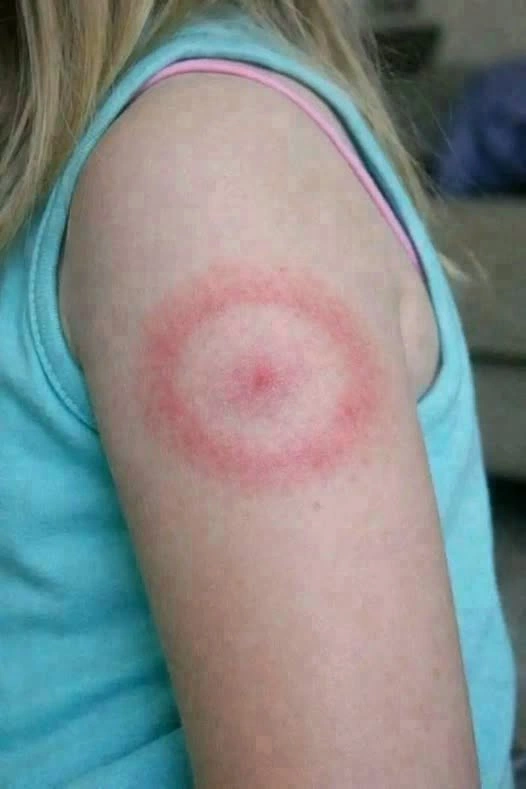
Discovering an unexpected circular rash on your child’s skin can trigger an immediate, visceral reaction, often leading to a cascade of worry about potential long-term health implications.
While the appearance of a red ring may seem alarming, it is essential to pause and recognize that many dermatological conditions present in this manner, ranging from benign irritations to issues requiring professional attention.
The initial impulse to fear the worst is a natural parental instinct, yet it often obscures the... objective assessment needed to determine the next steps.
By shifting your focus from a state of alarm to one of careful observation, you empower yourself to gather the necessary information that a healthcare provider will eventually need.
Remaining calm is not merely a suggestion for your own peace of mind; it is a practical tool that allows you to monitor the situation with the clarity required to distinguish between a transient skin reaction and a condition that warrants a clinical evaluation.
One of the most effective ways to track the progression of a skin lesion is to physically mark its boundaries. Using a pen to gently trace the outer edge of the circular rash provides a reliable visual reference point.
This simple technique allows you to see clearly if the redness is expanding, shrinking, or remaining stable over several hours. Because skin can change in appearance due to temperature, activity, or even the time of day, having a static line drawn on the skin serves as a consistent baseline.
This method removes the guesswork and helps you communicate precise information to a pediatrician or dermatologist if you decide that a medical consultation is necessary. In addition to tracing the border, documenting the rash through high-quality photography is an invaluable practice.
Take clear, well-lit photos of the area at regular intervals—perhaps every six to twelve hours—to create a visual timeline.
When capturing these images, try to include a common object for scale, such as a coin, so that the size of the rash is easily understood by anyone reviewing the documentation.
These photos act as a digital record that captures subtle changes in color, texture, or shape that might be difficult to describe from memory alone. By maintaining this log, you move away from the subjective, panic-driven narrative and toward an evidence-based approach that supports informed decision-making.
It is also helpful to observe the child’s overall behavior and physical state. Is the child acting normally? Are they eating, playing, and sleeping as they usually do, or is there a noticeable change in their energy levels or mood?
Pay attention to whether the rash is accompanied by other symptoms, such as fever, swelling, or localized heat. While a circular rash is a specific visual marker, it rarely exists in a vacuum.
By considering the child’s general well-being alongside the physical characteristics of the rash, you gain a more holistic view of the situation.