Artificial intelligence is rapidly changing the way scientists approach biology. Researchers can now use computational systems to analyze enormous amounts of biological information, identify patterns that would be difficult for humans to detect, and explore possibilities that might otherwise take years to investigate.
But a recent development has raised a difficult question: What happens when AI is used not only to study biological systems, but also to design biological entities that have never existed in nature?
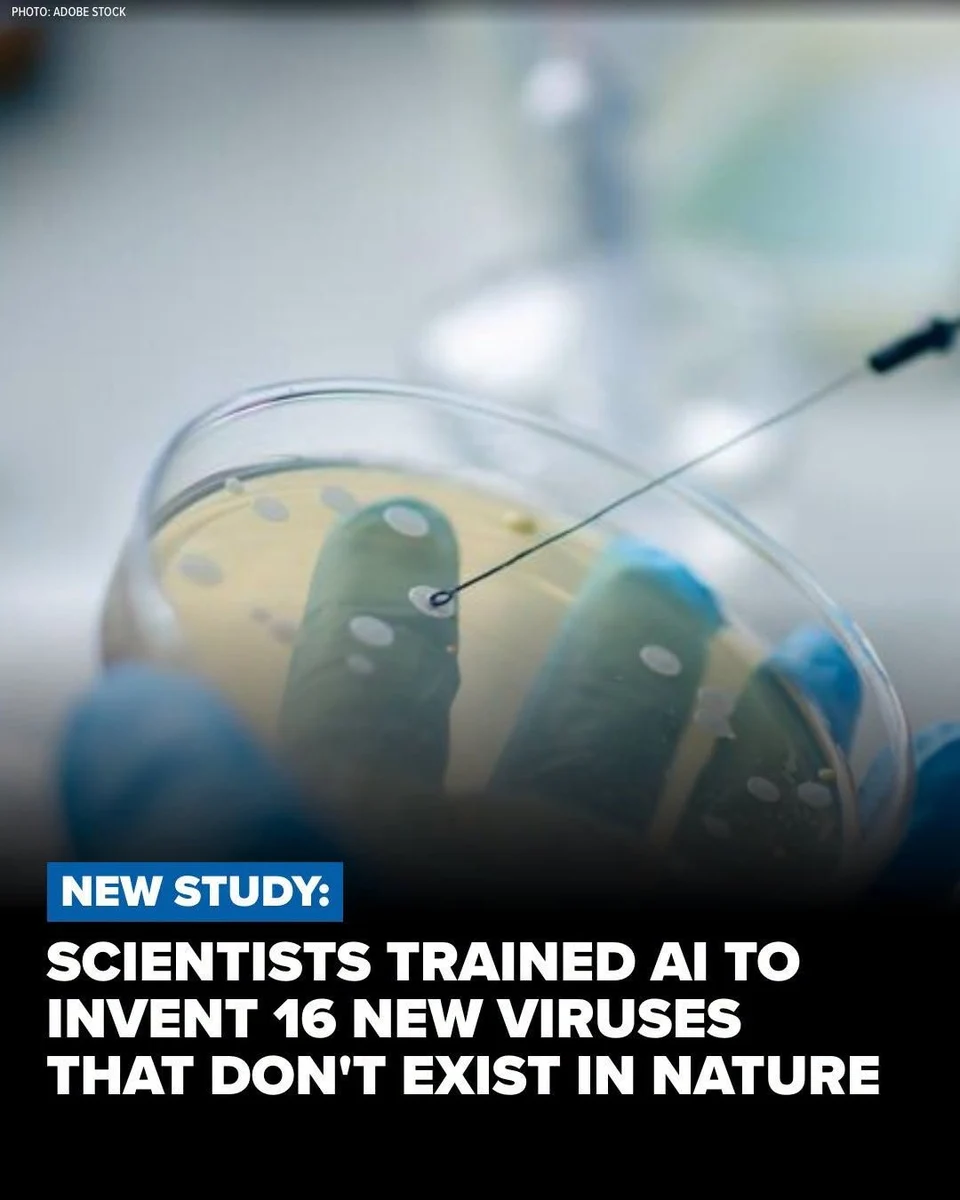
Reports that scientists used artificial intelligence to design 16 entirely new viruses have attracted significant attention because of the potential medical benefits—and the serious biosecurity questions surrounding the technology. The idea is both fascinating and unsettling.
On one hand, artificial intelligence could help researchers understand viruses in ways that were previously impossible. On the other, powerful computational tools could potentially lower barriers to biological experimentation, creating challenges for regulators, laboratories, and security experts.
The important point is that designing something computationally is not necessarily the same as producing a functioning biological agent. A computer model can generate theoretical biological sequences or structures, but translating a computational design into a real-world biological system involves additional scientific and technical steps.
That distinction matters when evaluating claims about AI-designed viruses. Nevertheless, researchers are increasingly interested in using AI to explore biological possibilities. Traditional biological research can be slow. Scientists may need to examine large databases, compare genetic information, test hypotheses, and conduct carefully controlled experiments.
AI can accelerate parts of this process by analyzing huge datasets and identifying relationships that might otherwise remain hidden. This capability could eventually contribute to new approaches for treating disease. Viruses themselves are not always purely harmful from a medical perspective.
Researchers have been studying viral systems for decades because certain viruses can interact with cells in highly specific ways. Scientists have explored modified viral platforms for applications including gene delivery and other medical technologies. The challenge is controlling those biological systems safely and reliably.
AI could potentially help researchers identify promising candidates before laboratory testing begins. Instead of examining every possible biological possibility experimentally, researchers can use computational models to narrow the field. That could save time and resources. It could also help scientists better understand how biological systems behave.
But the same power that makes AI useful for medicine can create risks. Biosecurity experts are concerned that increasingly sophisticated AI systems could eventually make it easier for inexperienced individuals—or malicious actors—to obtain dangerous biological information.
That concern is part of a much larger debate about the responsible development of artificial intelligence. AI models are becoming capable of reasoning about increasingly complicated scientific problems. They can summarize research, analyze data, generate hypotheses, and assist with experimental planning.