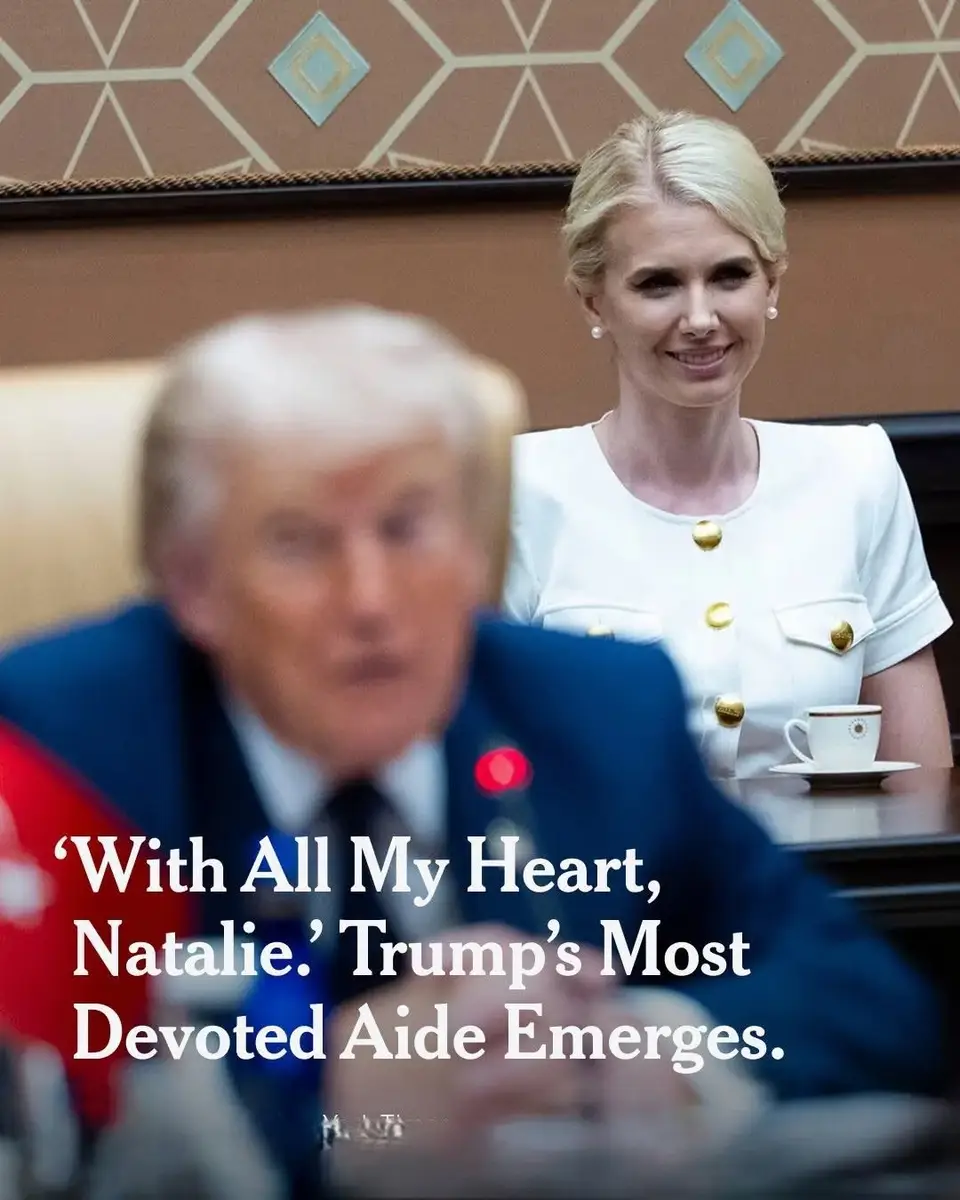
Inside the White House, some of the most influential people are not the ones standing at a podium or appearing regularly on television. They are the people working quietly behind the scenes, managing information, coordinating communication, and staying close to the president throughout an exhausting schedule.
Natalie Harp has become one of those figures. At 35 years old, Harp has attracted unusual attention because of how frequently she appears around President Donald Trump.
While she is not usually the person giving major public speeches, her presence has become difficult to miss for anyone closely following the president’s daily activities.
She has been described as a highly trusted West Wing aide with responsibilities that place her close to the center of the administration’s communication operation. Her role illustrates something important about modern presidential politics: influence does not always come from holding the most visible title. Sometimes it comes from proximity.
A president’s schedule can be relentless. Meetings, phone calls, briefings, travel, speeches, interviews, political events, and social-media activity can fill nearly every hour of the day. Someone has to help organize information, prepare material, coordinate messages, and make sure communication continues moving. That is where senior aides become essential.
Harp has reportedly developed a particularly close working relationship with Trump. Her supporters describe her as intensely loyal, hardworking, and committed to the president’s agenda.
Critics, meanwhile, have questioned how much influence an aide with such a low public profile can have when she is reportedly involved in so many aspects of the president’s daily communication. That contrast is what makes her story fascinating. She rarely seeks the spotlight herself.
Instead, she is often seen nearby while the president speaks, travels, works, or interacts with visitors. Her presence has become recognizable to political observers who follow the White House closely.
The image is striking: while cameras focus on the president, an aide stands nearby, watching carefully and remaining ready to assist. That kind of job requires enormous attention to detail. Presidential communication can change quickly. A single post on social media can dominate the news cycle within minutes.
A statement can move financial markets, influence political debates, or trigger reactions from foreign governments. Words written late at night can become front-page news the following morning. For someone involved in preparing or managing that communication, there is very little room for carelessness.
Harp’s reported involvement in the president’s social-media operation has therefore drawn particular interest. Trump has long used social media as a central political tool. His posts can bypass traditional news organizations and communicate directly with supporters and the public.
The process behind those posts, however, involves far more than simply typing words onto a screen.