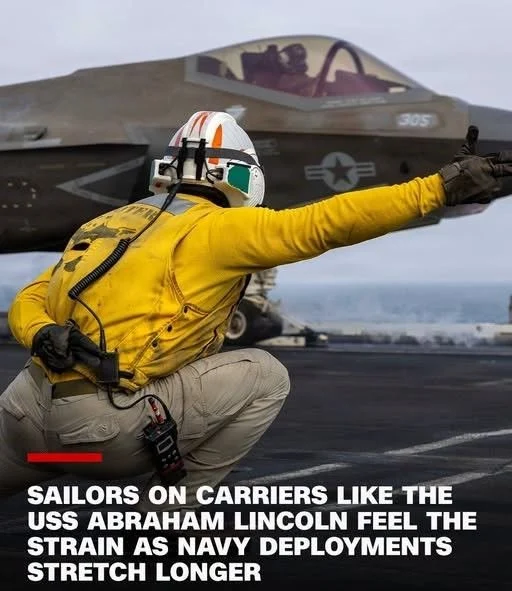
The USS Abraham Lincoln has become the center of growing concern inside the U.S. Navy after spending an extraordinary length of time at sea without a major port visit.
The aircraft carrier, carrying roughly 5,000 sailors and Marines, has been deployed for more than eight months and has spent more than 250 consecutive days at sea. What began as a demanding military mission has developed into a serious test of endurance for the people aboard the ship.
The Lincoln was originally scheduled for a deployment of roughly seven months. Instead, the ship remained at sea as the United States became increasingly involved in military operations connected to Iran. For the sailors aboard, the uncertainty has been particularly difficult. A normal deployment is already demanding.
Service members spend months away from their families, work long shifts and live in a confined environment. But sailors can generally expect periodic port visits, opportunities to communicate with loved ones and a clear understanding of when their deployment is expected to end.
The Lincoln’s current mission has disrupted much of that routine. Reports from family members and military news organizations describe concerns about shortages of supplies, plumbing problems, water issues, delayed mail and deteriorating morale. Families have told officials that some sailors are exhausted and increasingly worried about their mental health.
The most troubling reports involve sailors attempting to go overboard. Military Times reported that multiple sailors aboard the carrier had attempted to go overboard during the extended deployment, although the Navy has not provided a precise number of incidents or confirmed all of the accounts publicly.
Navy officials have said that psychological readiness is being continuously assessed and that counselors, chaplains and medical professionals are available aboard the ship. For families waiting thousands of miles away, those reports have been deeply frightening.
Some relatives have questioned whether the prolonged deployment has gone too far and whether sailors are receiving everything they need to remain physically and emotionally healthy. The concerns eventually reached senior Navy officials.
Family members participated in meetings with Navy leadership and described their worries about the conditions aboard the carrier. The conversations reportedly included concerns about mental health, supplies and the extraordinary length of the deployment. The controversy has also reached Congress.
Lawmakers have demanded greater information about the conditions aboard the Lincoln, particularly regarding food, sanitation, medical care and the psychological wellbeing of the crew. But Navy and Pentagon officials have pushed back against some of the most serious descriptions.
Defense Secretary Pete Hegseth said reports about poor conditions aboard the carrier had been “completely misrepresented.” The Navy has similarly emphasized that the crew continues to receive support and that leadership is monitoring sailors’ wellbeing.