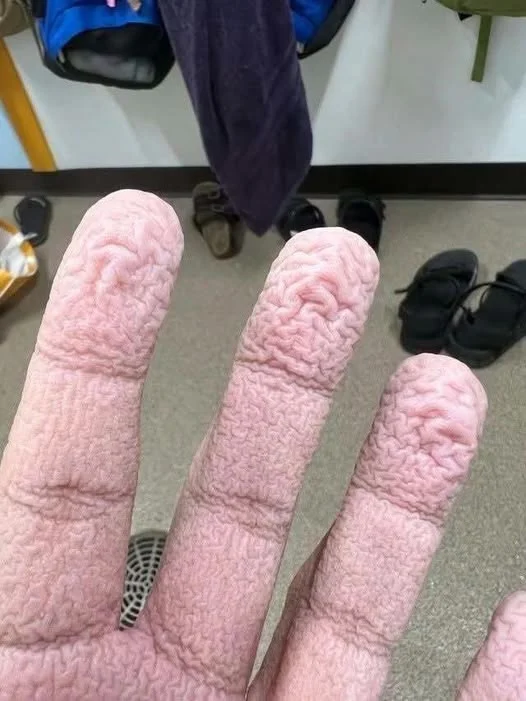
It is a common experience to emerge from a long bath, a swim in the pool, or a session of washing dishes to find that the skin on your fingertips has transformed into a series of distinct, prune-like ridges.
While many people once assumed this was simply a result of the skin absorbing water like a sponge, we now understand that this phenomenon is actually a deliberate, active nervous-system response that triggers blood vessels to constrict beneath the skin...
This vascular constriction reduces the volume of the tissue beneath the skin’s surface, causing the outer layer to fold inward and create the characteristic wrinkled texture we recognize. Far from being a mere byproduct of hydration, this reaction is widely believed by researchers to serve a significant evolutionary purpose.
By creating these channels, our hands may develop a superior ability to grip wet or slippery objects, effectively acting like the tread on a tire to channel water away from the contact surface. For the vast majority of individuals, this process is entirely benign and temporary.
Typically, the wrinkling begins after several minutes of immersion and will fade away completely once the hands are dried and the nervous system signals the blood vessels to return to their normal state.
It is a fascinating example of how our bodies adapt to environmental conditions in real time, demonstrating a level of physiological coordination that we rarely pause to consider during our daily routines.
However, while this reaction is usually a sign of a healthy, functioning nervous system, there are instances where the appearance of wrinkled skin warrants closer observation. Sometimes, the skin can be affected by external factors that disrupt its natural balance.
For instance, the frequent use of harsh soaps or excessive washing can strip the skin of its natural oils, damaging the delicate barrier that protects our hands. This damage can make the skin appear more wrinkled or prone to irritation even when it is not submerged in water.
Beyond external irritants, there are specific medical conditions that may manifest through abnormal or persistent wrinkling. Aquagenic wrinkling of the palms is one such condition where the skin reacts excessively to moisture.
Furthermore, skin changes can sometimes be linked to underlying health issues, including eczema, which causes inflammation and dryness, or even genetic factors such as those associated with cystic fibrosis.
In some cases, disorders that affect the autonomic nervous system—the same system responsible for the natural wrinkling response—can lead to atypical skin reactions that deviate from the standard pattern.
It is important to distinguish between the temporary, expected response to water and symptoms that suggest an underlying health concern.
If you notice that your fingers are wrinkling without any exposure to water, or if the wrinkling is accompanied by other concerning symptoms, it is advisable to consult with a healthcare professional.