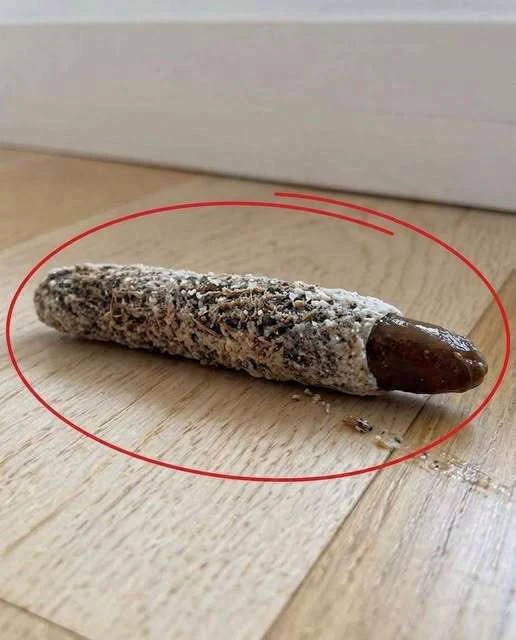
When you spot a small, unassuming object resting on the floor near your bedroom door, it is easy to dismiss it as mere household debris or a stray bit of lint. However, upon closer inspection, the item reveals a deliberate, tube-like structure that defies the appearance of random waste.
Its texture and shape suggest a level of craftsmanship that is entirely unexpected for something so small, leading to a lingering curiosity about its true nature and origin... This mysterious item is actually the protective case of a case-bearing moth larva, frequently referred to as a plaster bagworm.
These fascinating, albeit tiny, creatures are master architects of the domestic environment. The case itself is not a natural growth but rather a sophisticated construction project.
The larva meticulously binds together environmental materials—such as household dust, stray human or pet hair, carpet fibers, and other microscopic debris—using a silk-like substance it secretes. This results in a flattened, elongated shell that serves as both a mobile fortress and a highly effective camouflage against potential predators.
By utilizing the very materials that settle in our homes, the larva ensures that its home blends perfectly into the background of a floor or wall. As the larva matures, it carries this portable home everywhere it goes.
The case provides a critical layer of defense, allowing the insect to navigate the carpeted landscapes and hidden corners of a home while remaining largely invisible to the human eye.
The creature’s ability to repurpose the mundane remnants of human life into a durable, functional shelter is a remarkable testament to evolutionary adaptation. It demonstrates how certain organisms have successfully integrated themselves into our living spaces, thriving in the quiet, overlooked gaps between our daily routines.
The larva is essentially a tiny scavenger, using the resources it finds in the environment to sustain its development until it eventually reaches the pupal stage and emerges as a small, non-descript moth.
The presence of a plaster bagworm case often serves as a gentle reminder that our homes are not entirely isolated from the natural world. While we tend to think of our living environments as controlled, sterile, or fully understood, there is an entire miniature ecosystem operating just beneath our notice.
These larvae are generally harmless, feeding on small particles of organic matter found in dust or fabric, yet their existence highlights the complex interplay between human habitation and the small creatures that share our domestic sphere.
Discovering one of these cases is not a cause for alarm, but rather an invitation to appreciate the hidden biological activity that persists in even the most well-maintained residences.
Because they are solitary, finding a single case rarely indicates a large-scale issue, but rather suggests that a lone larva has found a suitable micro-habitat.