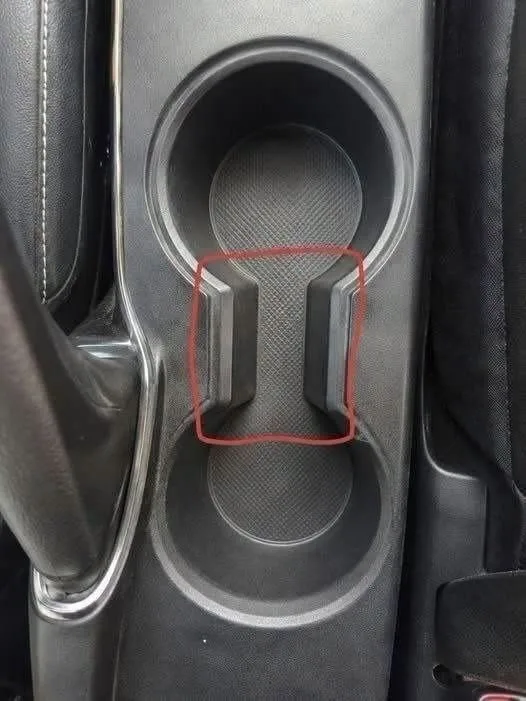
When you glance at the center console of your vehicle, you likely notice a variety of compartments designed to manage the clutter of daily life. Among these, the narrow, seemingly insignificant slot positioned directly between your two cup holders often draws curiosity but rarely receives much attention.
While many drivers dismiss this feature as a mere byproduct of plastic molding or a design quirk, it actually serves a highly intentional and remarkably practical purpose for securing lightweight items during transit...
By sliding the handles of a grocery or shopping bag into this narrow gap, you create a stable anchor point that keeps the container upright.
This simple maneuver is particularly effective for preventing bags filled with takeout containers, loose produce, or delicate items from tipping over or spilling their contents when you encounter sharp turns, sudden stops, or rapid acceleration on the road.
Instead of allowing your shopping to slide across the passenger seat or tumble onto the floorboards, this dedicated slot provides a secure, centralized location that keeps your belongings contained and organized throughout your journey.
The physics of this arrangement are straightforward: by pinning the handles in place, you limit the lateral movement of the bag, which is the primary cause of spills during standard driving maneuvers.Fiber & Textile Arts This clever design feature is found across a wide range of automotive manufacturers, appearing in various models from major brands including Honda, Toyota, Nissan, Mazda, Subaru, Ford, and GM.
Engineers often incorporate these subtle structural details to enhance the ergonomics of the cabin, recognizing that drivers frequently use their vehicles to transport more than just passengers.
By providing a designated spot to tether bag handles, the interior design team helps maintain a cleaner, safer environment, ensuring that your groceries remain exactly where you placed them until you reach your final destination.
This attention to detail is a hallmark of modern interior engineering, where every square inch of the console is evaluated for its potential utility. Beyond its primary function as a bag stabilizer, many drivers have discovered that this slot is remarkably versatile for managing other small personal belongings.
For instance, the gap can be used to secure purse straps, preventing them from sliding off the center console or becoming tangled in the gear shifter.
Similarly, it serves as a convenient temporary dock for items like sunglasses, smartphones, or even small reusable shopping bags that might otherwise clutter your dashboard or storage bins.
While the slot was not necessarily designed to hold every one of these items, its existence demonstrates how thoughtful interior planning can maximize the utility of even the smallest spaces within a vehicle. It effectively turns a static piece of plastic into a multi-purpose tool for the organized driver.